What the Old Wolves Leave Behind: How Creative Instincts Pass Between Generations
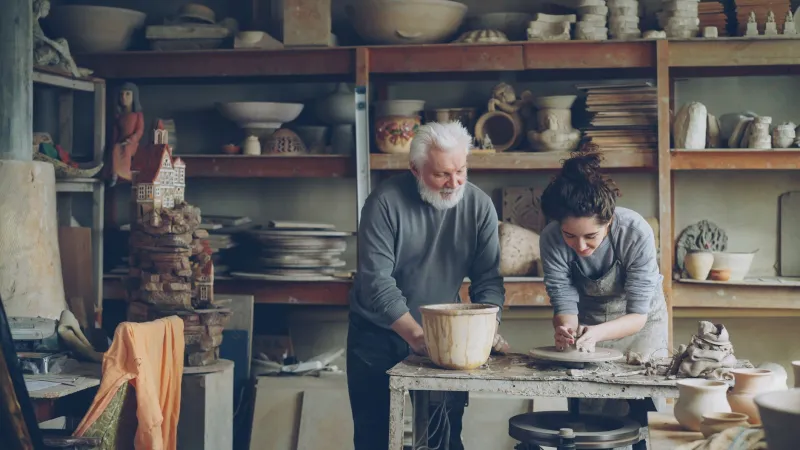
There's a moment every young creator knows. You're in the room with someone who's been doing this a long time — a veteran editor, a seasoned game designer, a filmmaker with twenty years of scar tissue — and they make a call that makes zero logical sense on paper. They kill a scene you loved. They reroute an entire storyline based on what feels like nothing more than a hunch. And somehow, frustratingly, they're right.
You ask them why. They shrug. "It just didn't smell right."
That's the scent. And it doesn't come from a textbook.
The Stuff Nobody Writes Down
Every creative pack — whether it's a writers' room in Burbank, a tabletop RPG crew in Austin, or an indie game studio in Brooklyn — carries a body of unwritten knowledge that lives nowhere except in the behavior of its most experienced members. It's not the craft fundamentals you can Google. It's subtler than that.
It's knowing when to push a collaborator and when to back off. It's sensing that a project has lost its energy before anyone's said a word. It's the instinct to protect a weird, fragile idea from the group long enough for it to grow teeth.
This is the knowledge that makes or breaks a creative lineage. And almost none of it gets transmitted through formal mentorship programs, structured feedback sessions, or onboarding documents. It moves the way scent moves through a pack — invisibly, gradually, through shared space and repeated exposure.
The problem is that most creative communities don't realize this is happening until it stops happening.
Learning by Running Alongside
In wolf packs, younger members don't get lectures on hunting strategy. They learn by running with the adults — watching the way the experienced wolves read terrain, adjust formation, and respond to shifting conditions in real time. The knowledge transfers through observation and imitation long before it ever becomes conscious understanding.
Creative communities work the same way, even if we don't frame it that way. A junior writer who sits in on enough edit meetings starts to internalize a certain editorial rhythm. A new illustrator who works closely with a veteran art director begins to absorb not just technique but judgment — when to simplify, when to commit to complexity, when to blow the whole thing up and start over.
This kind of learning is slow. It's inefficient by modern productivity standards. But it produces something that no accelerated skills workshop can replicate: a felt sense of quality that lives in the body, not just the brain.
The trouble is that it requires proximity. And proximity requires patience — something in short supply in an era of remote-first teams, rapid turnover, and the constant pressure to scale.
When the Lineage Breaks
Here's what actually happens when a creative community loses its elders too fast, or fails to keep them in contact with younger members: the unwritten knowledge evaporates. Not immediately. It fades.
You'll see the symptoms before you understand the cause. Work starts feeling technically competent but somehow hollow. Decisions get made by committee logic rather than instinct. The pack loses its ability to take interesting risks because nobody's around who remembers why those risks are worth taking.
This isn't nostalgia talking. It's a structural problem. When the carriers of implicit knowledge leave — whether through burnout, departure, or simple isolation from the day-to-day work — they take a whole layer of cultural intelligence with them. The younger generation inherits the tools but not the feel for how to use them.
Some of the most distinctive creative voices in American culture have faded this way. Not because the craft died, but because the transmission broke down. The scent trail went cold.
Explicit Teaching vs. Absorbed Wisdom
This raises a real tension worth sitting with: should experienced creators try to make the implicit explicit? Should they document the instincts, articulate the unspoken rules, turn the felt sense into teachable frameworks?
The answer is probably yes, but carefully.
There's real value in experienced creators naming what they know. When a veteran storyteller can articulate why a scene doesn't land — not just that it doesn't — they give younger collaborators a conceptual hook to hang future observations on. That's useful. That accelerates the absorption.
But there's a trap here too. The moment you over-formalize creative instinct, you risk killing it. You turn living judgment into dead rules. You produce creators who can recite principles but can't feel the room. The goal isn't to replace the slow, osmotic learning — it's to create conditions where that learning can happen faster and stick more reliably.
The best creative elders do both. They name things when naming helps. They stay quiet when silence teaches better. They know the difference.
How Healthy Packs Keep the Scent Alive
The creative communities that sustain their identity across generations tend to do a few things differently.
They keep their experienced members in the work — not just in advisory or administrative roles, but actually collaborating, making things, staying close enough to the creative process that the transfer can happen naturally. When veterans get kicked upstairs too early, the pipeline breaks.
They create rituals of proximity. Regular critiques. Shared project reviews. The kind of collaborative sessions where a newcomer can watch how a seasoned creator thinks in real time, not just hear about it afterward. These rituals don't have to be formal. Sometimes the most powerful transmission happens in a casual post-mortem over bad coffee.
And they treat creative lineage as something worth protecting deliberately — not just something that happens on its own. Packs that thrive are the ones that understand their identity lives in the people, not the portfolio. When the people leave without passing anything on, the portfolio becomes a monument rather than a living thing.
The Scent You'll Leave
If you're a younger creator, the takeaway is simple: get close to the people who've been doing this longer. Not to extract techniques. To absorb the thing underneath the techniques — the judgment, the instinct, the felt sense of what the work is actually for.
If you're a veteran, the responsibility runs the other direction. The unwritten knowledge you carry isn't yours to keep. It belongs to the pack. Find ways to stay in the work long enough for it to transfer. Let people watch you make decisions, not just hear about the decisions you made.
The scent that lingers across creative generations isn't genius. It isn't talent. It's the accumulated residue of people who cared enough to stay close to each other long enough for something real to pass between them.
That's how packs survive winters. That's how lineages last.