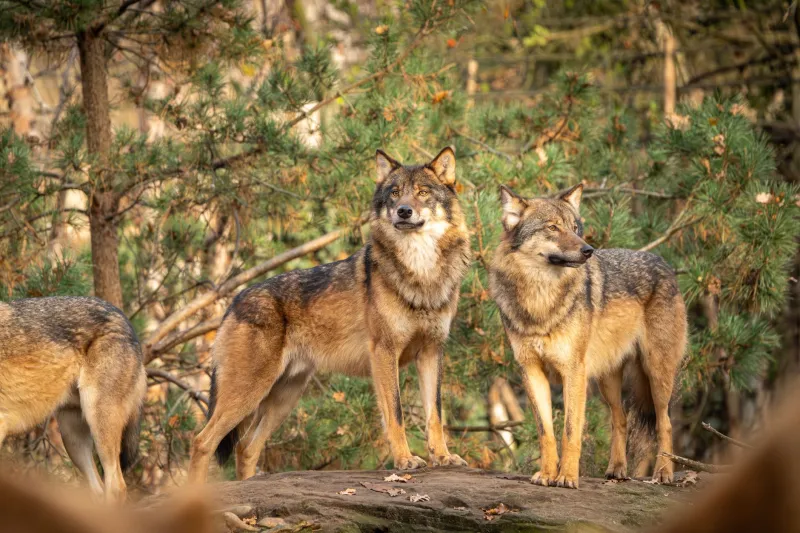
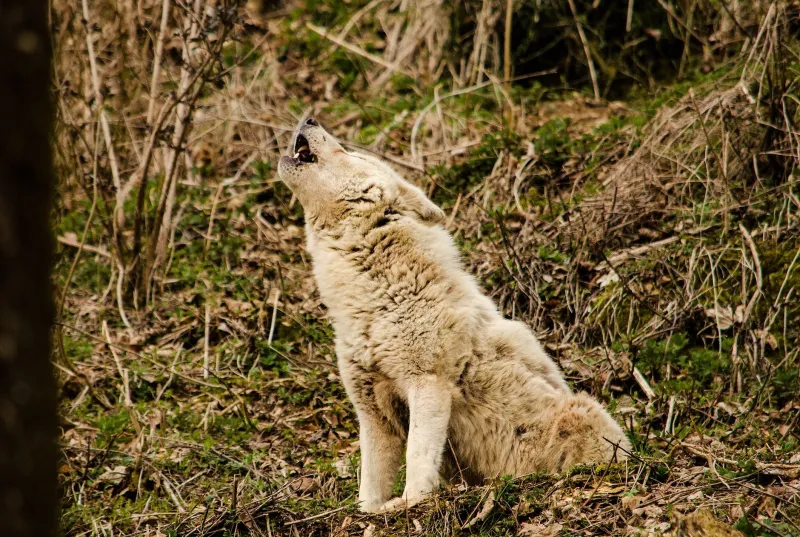
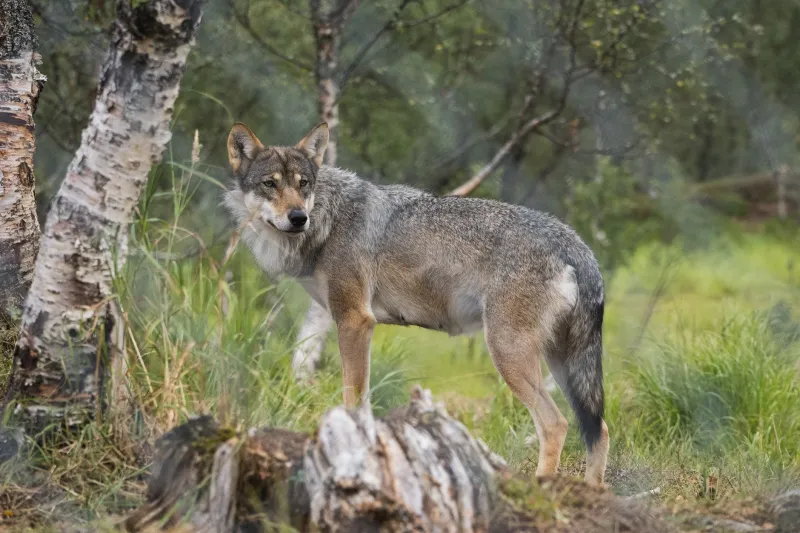
Still Running: What Happens to a Pack When the Lead Wolf Is Long Gone
There's a moment every pack eventually faces: the wolf who taught everyone how to move is gone. Maybe they stepped back. Maybe they burned out. Maybe they died. And the rest of the pack stands at the edge of the tree line, wondering if they still know how to hunt without them.
Except — sometimes they do. Sometimes the whole pack keeps running, keeps finding prey, keeps howling in a voice that still carries the shape of the one who first taught them the sound. That's not magic. That's legacy.
And it looks nothing like what most people think it does.
Legacy Isn't Fame. It's Scent.
When most people picture a lasting creative legacy, they picture monuments. Statues. Museum retrospectives. A Wikipedia page with a tidy summary at the top. But that's not how creative influence actually travels through a community. It travels the way scent does — invisible, persistent, impossible to fully trace back to its source.
Take Elmore Leonard. Most casual readers in the US today couldn't pick him out of a lineup, but his fingerprints are on half the crime fiction being published right now. His rules about writing — the famous ten of them, especially the one about leaving out the parts people skip — didn't just influence other writers. They rewired how an entire generation thinks about prose economy. You can feel him in authors who never met him, who maybe only read one of his books in a college course, who absorbed his philosophy secondhand through someone else who absorbed it firsthand.
That's the scent mark that never fades. It doesn't announce itself. It just is.
The Work That Teaches the Pack
Here's the thing about truly lasting creative work: it functions as a teacher long after the creator has stopped teaching. It answers questions the maker never anticipated. It models solutions to problems that didn't exist when it was made.
Consider the Shaker furniture makers of 19th-century America. They weren't trying to build a design legacy. They were building chairs and tables as an expression of spiritual discipline — simplicity as devotion. They had no interest in fame or influence. Most of them lived communally, worked anonymously, and wanted their objects to function rather than impress.
And yet Shaker design is everywhere. It shaped mid-century modernism. It's in IKEA's DNA. It's in the aesthetic choices of Brooklyn woodworkers posting on Instagram right now. The original pack is long gone, but the way they moved through their craft taught everyone who came after them something essential about restraint and purpose.
That's the paradox of lasting creative influence: the work that tries hardest to announce itself often fades fastest, while the work that was just trying to be honest keeps teaching long after the teacher is gone.
The Difference Between a Performance and a Practice
This is where it gets uncomfortable, because most of us who create things want to matter. We want our work to land. We want to be remembered. And there's nothing wrong with that hunger — a pack without hunger dies. But there's a version of that desire that curdles into something else: a performance of significance rather than a practice of it.
You see it everywhere in creative communities. The creator who's more focused on being seen as influential than on doing the actual work. The artist whose output slows to a trickle because they're spending most of their energy managing their reputation. The writer who's so concerned with their brand that every sentence feels like it's auditioning for an interview rather than trying to actually say something.
Performances end. Practices compound.
Aurora Robson has been building sculptures out of ocean plastic for years, mostly outside the mainstream art world's spotlight. She's not a household name. But the practice she's built — the methodology, the community of collaborators she's trained, the way she's documented her process — has seeded similar work across the country. Her pack keeps growing because she built something real enough to replicate, not just admire.
That's the difference. A performance gives the audience something to watch. A practice gives the next generation something to do.
What Gets Passed Down Isn't Always What You Think
Here's something worth sitting with: the parts of your work that outlive you are rarely the parts you were most proud of.
Gordon Parks is remembered for his photography — and rightfully so. But the thing that kept reverberating through Black American artistic communities wasn't just the images. It was his insistence that art and documentation weren't opposites, that bearing witness was itself a creative act, that the camera could be a weapon and a love letter at the same time. That posture — that refusal to separate aesthetics from accountability — became a north star for photographers, filmmakers, and journalists who came after him.
He probably couldn't have predicted that. Most creators can't predict which thread from their work will keep pulling.
This is actually freeing, if you let it be. It means the pressure isn't to make the perfect thing, the iconic thing, the thing that goes in the museum. The pressure is to be genuine enough, rigorous enough, and generous enough with your process that something worth carrying forward actually gets made.
Building Something That Runs Without You
The wolves who leave the deepest tracks aren't always the loudest or the fastest. Sometimes they're the ones who ran in a way that showed the rest of the pack something about the terrain — something that changed how everyone moved through it forever after.
If you're building something creative right now, the question worth asking isn't will I be remembered? It's something quieter and harder: Am I building something that teaches? Is the work honest enough to be useful to someone who encounters it after you're gone? Is your process documented, shared, passed on — or is it locked inside your head, dying with your career?
The scent mark that never fades isn't left by the wolf who howled the loudest. It's left by the one who ran true — who moved through the territory in a way so particular, so committed, so itself, that the forest kept the shape of it long after the pawprints filled in with snow.
Run true. That's the whole thing. That's all of it.
The pack will carry the rest.