Killed by Committee: How Your Pack Is Smothering Its Own Best Ideas

Somewhere in your group chat right now, there's a dead idea. Maybe it was posted at 11 PM with three fire emojis and a "hear me out." Maybe it got two thumbs up, one confused face, and then silence. Maybe someone poked a hole in it before it even had a chance to breathe, and the person who shared it quietly deleted the message and never brought it up again.
That's the thing about packs. The same closeness that makes them powerful can make them absolutely lethal to anything new, strange, or half-formed. You get a crew of smart, opinionated people in a shared space, and suddenly every raw idea has to survive a gauntlet before it's even had time to stretch its legs.
This is one of the quietest ways a creative pack can start losing its edge — not through conflict or burnout, but through the slow death of ideas that never got the chance to become something real.
Why Groups Eat Their Own Young
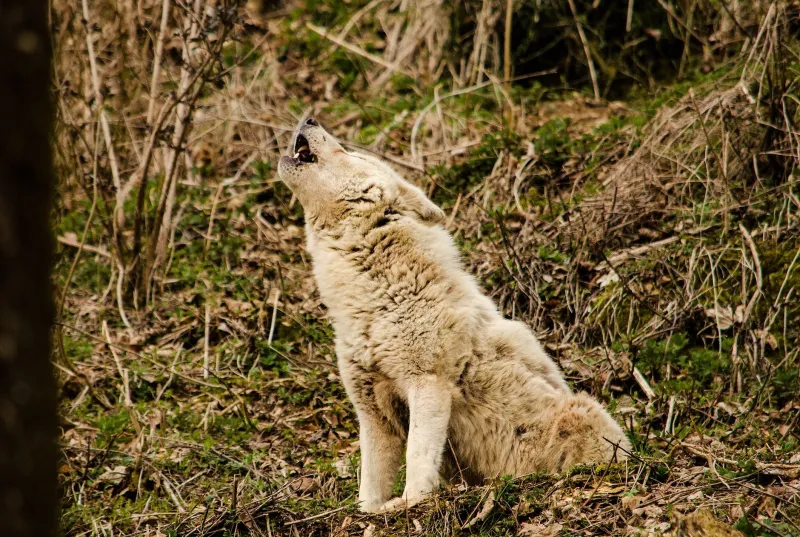
Here's the psychology at play: when an idea is brand new, it's fragile. It doesn't have context yet. It doesn't have a finished shape. It's basically a wolf pup — all instinct and potential, but not built to survive a full pack critique on day one.
Group environments, even good ones, tend to default to evaluation mode fast. Someone shares something, and the rest of the pack immediately starts stress-testing it. Is it practical? Has it been done before? What's the budget? Who's going to do the work? These are all valid questions — just not at the moment of conception.
Research on creative group dynamics consistently shows that premature criticism doesn't just kill bad ideas. It kills good ones too, because the person who had the idea learns quickly that sharing raw thoughts comes with social risk. So they start filtering themselves before they even open their mouth. The boldest instincts get swallowed whole, and what's left is the safe stuff — the ideas that are already polished enough to defend, which usually means they're already a little boring.
Add in the fact that most of us are doing this over text, with read receipts and reaction emojis standing in for actual nuance, and you've got a perfect environment for creative ideas to quietly choke out.
The Consensus Trap
There's a specific flavor of this problem that hits packs who really care about each other: the consensus trap. When everyone in your crew genuinely values harmony and mutual respect, there's a strong pull toward ideas that everyone can immediately agree on. And ideas that everyone immediately agrees on are almost never the interesting ones.
The most transformative creative moves — the ones that actually shift how your pack operates or what it produces — tend to make at least a few people uncomfortable at first. They require someone to say "I think we should do something we've never done before" and mean it. That kind of pitch doesn't land clean in a group setting. It creates friction. And friction, in a pack that prizes cohesion, often gets smoothed over before anyone stops to ask whether the friction was actually pointing at something worth following.
Seeking consensus isn't bad. But making it the first filter is.
Protecting the Wild Idea Before the Pack Sees It
So what do you actually do about this? A few things, and none of them require blowing up how your pack operates.
Give ideas a gestation period. Before anything goes to the group, let it sit with its creator for a beat. Even 24 hours. The goal isn't secrecy — it's development. A half-formed idea shared too early dies. That same idea, given a little time to grow some muscle, can survive the pack's scrutiny and come out stronger for it.
Separate generation from evaluation. This is probably the single most effective structural shift a creative pack can make. When you're brainstorming, brainstorm. No judgment, no devil's advocacy, no "but have you thought about..." Save that for a separate conversation, a separate session, a different mode entirely. The two things cannot happen simultaneously without one of them losing.
Designate a wild idea champion. In some packs, it helps to have one person whose explicit job during a creative session is to protect the weird stuff. Not to argue that every strange idea is genius, but to make sure it at least gets a full hearing before the group moves on. Someone has to hold the door open for the ideas that don't arrive pre-justified.
Watch your reaction habits. In a group chat especially, the first few responses to a new idea set the temperature for everything that follows. If the first two people respond with skepticism, the idea is probably dead regardless of what anyone says after. If your pack has a culture of leading with curiosity — "tell me more" instead of "but what about" — the whole dynamic shifts.
The Ideas That Got Away
Every successful creative crew has a version of this story: the idea that almost didn't make it. The concept that one person almost didn't share because they figured the group would shoot it down. The direction that felt too weird until someone fought for it anyway.
Those near-misses are worth sitting with, because for every one that got through, there are dozens that didn't. Ideas that died in the chat because the timing was off, or the energy was low, or the wrong person reacted first. Ideas that would have been worth something if they'd just been given a little more oxygen.
A pack that understands this doesn't become less critical. It becomes more intentional about when and how it applies that critical instinct. It learns to hunt without trampling what it hasn't caught yet.
Run Before You Critique
The best packs aren't the ones where every idea gets approved. They're the ones where every idea gets a real chance. Where the weird pitch doesn't automatically become a liability. Where someone can say "I don't know if this works yet, but I think there's something here" and be met with curiosity instead of a committee vote.
Your group chat isn't the problem. The reflex to evaluate before you explore — that's the predator you actually need to watch for.
Let the wild ideas run a little before you start testing them. You might be surprised what they grow into.