Hunt Smart, Not Alone: How Creative Packs Use Other People's Ideas to Sharpen Their Own
There's this persistent myth floating around creative circles — the idea of the lone genius, hunched over a desk in the dark, conjuring something totally original from pure imagination. No outside influence. No borrowed moves. Just raw, untouched brilliance.
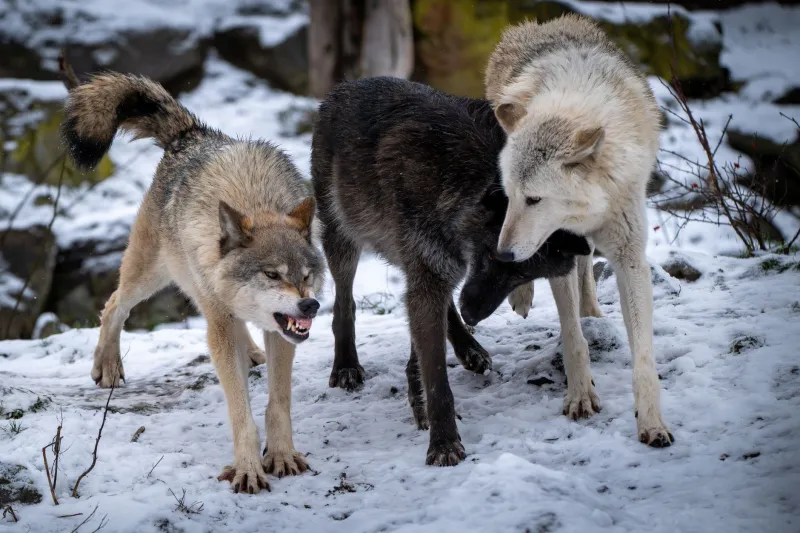
Wolves don't hunt like that. And neither do the creative packs worth paying attention to.
The most effective creative teams — the ones consistently putting out work that lands, that grows, that actually connects with people — are studying the landscape around them constantly. They're watching what other packs are doing, pulling apart what works, and adapting it into something that fits their own terrain. That's not laziness or theft. That's how creative evolution actually functions.
The trick is knowing the difference between stealing smart and just plain stealing.
Every Pack Hunts on Shared Ground
Here's the honest truth: there are no truly original ideas. Every story, every design system, every community format, every content structure you've ever loved was built on something that came before it. Shakespeare borrowed plots. Hip-hop sampled records. Silicon Valley cloned features between competitors so fast it became industry standard.
This isn't a bug in the creative process — it's a feature.
The question isn't whether your pack is drawing from the wider ecosystem. It's whether you're doing it consciously, deliberately, and with enough self-awareness to transform what you find into something distinctly yours. The wolves that thrive aren't pretending the forest belongs only to them. They're reading the tracks left by everyone else and using that information to move smarter.
When a creative team refuses to look outward — insisting their process is so pure it can't be contaminated by outside influence — they usually end up reinventing wheels badly. Meanwhile, the pack that studied five different wheel designs and combined the best elements of each? They're already three territories ahead.
What "Ethical Hunting" Actually Looks Like
Before anyone gets defensive, let's be clear about what we're not talking about. Copying someone's specific work without credit, plagiarizing writing, ripping off a small creator's concept and outscaling them with more resources — none of that is what this is about. That's not hunting. That's scavenging in a way that poisons the whole ecosystem.
Ethical adaptation looks different. It sounds like:
"That community runs their Discord in a way that keeps engagement high — what's the underlying principle there, and how would it work for our audience?"
"That podcast structure creates a really strong sense of intimacy. What's making that happen, and can we build something with the same emotional effect?"
"That newsletter's subject line strategy gets wild open rates. Let's understand the psychology behind it and apply it to our voice."
You're not copying the thing. You're reverse-engineering the why behind the thing. Then you're rebuilding it from scratch through the lens of your pack's specific identity, values, and audience. That's a completely different animal.
Build a Scouting Practice Into Your Pack's Rhythm
Most creative teams don't do this intentionally — they stumble across good ideas by accident and occasionally absorb them. But the packs that consistently outpace their competition turn this into a real practice.
Set aside dedicated time — even 30 minutes a week — where someone on your team is specifically tasked with looking outward. Not doom-scrolling, not passive consumption. Active scouting. Ask: what's working in adjacent spaces? What are creators outside our genre doing that we could translate into our world?
Keep a shared document — a den log, if you want to be on-brand about it — where the pack drops observations. Not "hey copy this" but "hey, look at this mechanic/format/approach — what does it make you think about our own work?"
The goal is to make outside observation a normal part of how your team thinks, not a guilty secret or an afterthought.
The Remix Mindset vs. The Copy Mindset
There's a useful distinction musicians talk about: the difference between a cover and a remix. A cover tries to recreate the original as faithfully as possible. A remix takes the raw material and runs it through a completely different creative filter until it becomes something new.
Creative packs that grow are remixers, not cover bands.
When you see a storytelling format that's crushing it somewhere else, you don't just transplant it into your work. You ask: if we stripped this down to its core function, what problem is it solving? What emotional need is it meeting? Then you rebuild a solution to that same problem using your pack's specific materials — your voice, your community, your aesthetic, your values.
The result should feel nothing like what you originally studied, even if the underlying architecture is similar. That's how you stay original without pretending inspiration doesn't exist.
Credit the Trail
One thing that separates packs with real integrity from those that quietly appropriate everything around them: they credit their influences openly.
This isn't just ethical — it's actually good strategy. When you say "we were inspired by how [creator/community/brand] approached X," you're signaling that you're paying attention to the wider world. You're building goodwill with the people you're drawing from. You're showing your audience that your ideas exist in a real creative ecosystem, not a vacuum.
In tight-knit creative communities — and most US creative communities are tighter than they look — people notice when you take without acknowledging. They also notice when you're generous with credit. That reputation compounds over time in both directions.
Your Pack's Voice Is the Filter That Makes It Work
Here's the thing that makes all of this possible without turning your work into a patchwork of other people's ideas: your pack's distinctive voice is the filter everything has to pass through.
If your team has done the work of knowing who you are — what you stand for, how you sound, what you refuse to do — then you can absorb a hundred outside influences and still produce something that's unmistakably yours. The identity is the protection. It's what ensures that everything you adapt gets transformed in the process.
Packs that don't have a strong internal identity are the ones that get lost in this process. They borrow a format here, a tone there, a structure from somewhere else, and end up with nothing that holds together. The borrowing isn't the problem — the lack of a clear self is.
Get that right first. Then go hunting.
The Strongest Packs Run With Eyes Open
Isolation is romanticized in creative culture. The idea that influence is contamination, that looking outward is weakness, that the best work comes from ignoring everything around you — it sounds noble. It just doesn't hold up.
The packs making real noise right now are curious, outward-looking, and unashamed about learning from the full landscape around them. They're not copying. They're hunting smart — studying the terrain, adapting what they find, and running it all through the filter of a creative identity strong enough to make it their own.
That's not a compromise. That's how the pack gets stronger.