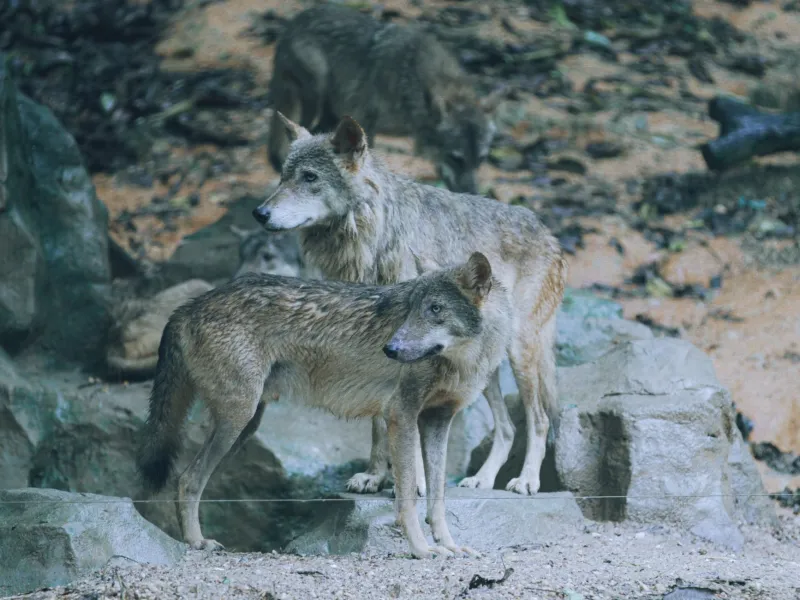
Feed the Whole Pack: Why Sharing Your Secrets Makes You Stronger, Not Weaker
There's a certain kind of creator who treats their process like a classified document. They'll share the finished product — the polished game, the published story, the slick illustration — but ask them how they got there and suddenly they develop selective amnesia. The brush settings? Proprietary. The dialogue structure they've been refining for three years? Earned. The worldbuilding framework that makes their lore feel alive? Good luck prying that loose.
The logic seems reasonable on the surface. You worked hard for that knowledge. Why hand it to someone who might use it to outrun you?
Here's the problem with that logic: it assumes creative work is a footrace with a single finish line. It isn't. And the packs that figured that out a long time ago are lapping everyone still jogging alone, clutching their notebooks to their chests.
The Scarcity Trap
Scarcity thinking made sense when resources were actually scarce. If you're a wolf and you've got a kill, sharing it means less meat for you. That math is real. But knowledge doesn't work that way. When you teach someone your chord progression trick, you still have it. When you drop your outlining method into a Discord thread, your ability to outline doesn't shrink. The technique doesn't get used up.
What does happen — and this is the part the gatekeepers miss — is that the idea comes back to you transformed. Someone takes your framework, breaks it, reassembles it into something you never would have tried, and suddenly you've got a new tool you didn't build. That's not charity. That's compound interest on your intellectual investment.
Fanfiction communities have understood this forever. Archive of Our Own isn't just a repository of stories — it's a living curriculum. Writers share not just finished fics but process posts, craft breakdowns, "here's how I wrote this scene" footnotes. The result is a community that has collectively developed a sophisticated shared vocabulary around things like pacing, emotional beats, and character interiority that rivals anything being taught in MFA programs. And it's free. And it's open. And it keeps getting better because nobody's hoarding the syllabus.
What Indie Game Dev Got Right
Look at the indie game development scene and you'll see the same pattern playing out in real time. Communities like the Game Maker's Toolkit subreddit, itch.io developer forums, and various Discord servers dedicated to specific engines are absolutely saturated with tutorials, breakdowns, and postmortems where developers explain exactly what worked, what failed, and why.
Does that mean everyone makes the same game? Obviously not. What it means is that the baseline technical competency across the entire community rises, which means the creative ceiling rises with it. When you're not spending six months reinventing a camera system that someone else already solved and documented, you've got six months to push into territory nobody's explored yet.
Notch published Minecraft's early code and design thoughts openly. Toby Fox, creator of Undertale, has talked extensively about his process and inspirations. These weren't acts of naive generosity — they were strategic contributions to an ecosystem that made their own work more visible, more celebrated, and more connected to a community that would evangelize it for years.
The Pack That Eats Together
Here's what separates a pack from a collection of lone wolves wearing matching jackets: shared resources, shared knowledge, and a genuine investment in each other's growth. A wolf pack doesn't have one member who knows how to hunt while the rest figure it out on their own. The behaviors get passed down, refined, adapted. That's how the pack gets better at hunting — not by hoarding the technique but by running it together until everyone's faster.
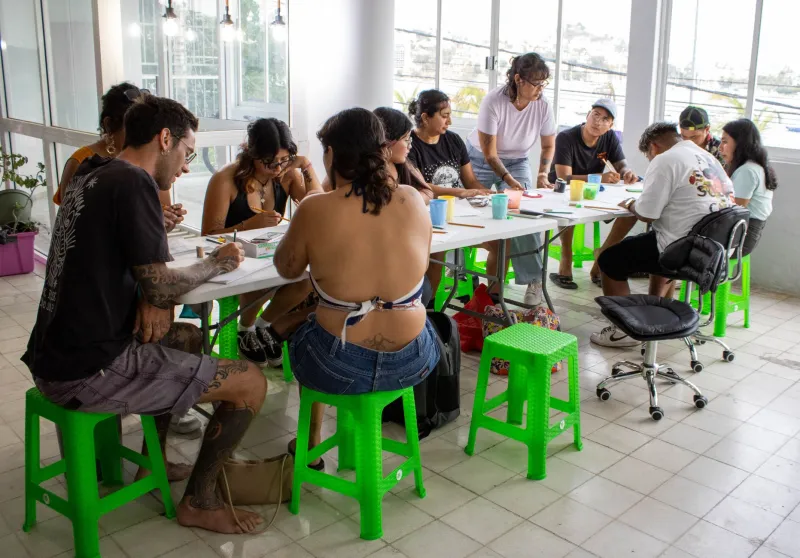
Creative packs work the same way. The zine communities in cities like Portland, Chicago, and Brooklyn have built entire micro-publishing ecosystems on this principle. Go to a zine fest and you'll find tables staffed by people who will happily tell you their printer, their paper source, their layout software, their pricing strategy. Why? Because more zines in the world means more people who read zines, which means a bigger audience for everyone. The scarcity logic collapses completely when you zoom out far enough.
The same thing happens in tabletop RPG design communities, in underground music scenes, in street art circles. The packs that thrive are the ones where someone who figures out a new technique immediately wants to show the rest of the crew.
Keeping Your Voice While Sharing Your Tools
None of this means your creative identity dissolves into the collective. Your voice, your perspective, your specific obsessions — those don't get handed out in a tutorial. You can teach someone every structural trick you know and they still won't make your work. Because your work isn't just the technique. It's what you do with it, what you're trying to say, the particular way your brain connects things that nobody else's brain connects the same way.
The fear that sharing your methods will make you replaceable assumes that your value is purely technical. If that's true, there's a bigger problem to solve than whether to share your brush settings. But for most creators, the technique is just the vehicle. The destination is something only you can navigate to.
Sharing the map doesn't mean everyone ends up in your exact spot.
What the Gatekeepers Actually Lose
Beyond the philosophical argument, there's a practical cost to hoarding that rarely gets acknowledged: isolation. The creator who protects their process from the community tends to drift away from it. They stop learning because they've cut themselves off from the feedback loop. They stop growing because growth requires friction, and friction requires other people.
Meanwhile, the pack keeps running. Keeps adapting. Keeps building on what the last member figured out. The gap between the gatekeepers and the collaborators doesn't stay static — it widens, steadily, in one direction.
The wolves that hunt together eat. The ones that guard their territory alone eventually find they've been circling an empty field.
Throw your best ideas into the pile. Watch what comes back. That's not weakness. That's how a pack grows teeth.