The Story Doesn't Belong to You Alone: Making Fiction With a Pack
Forget the image of the lone writer in a garret. That story has always been at least partially a myth — Shakespeare had collaborators, Tolkien had the Inklings, and half the television writers you love spent their most creative years in a room full of people arguing about character motivation over cold pizza.
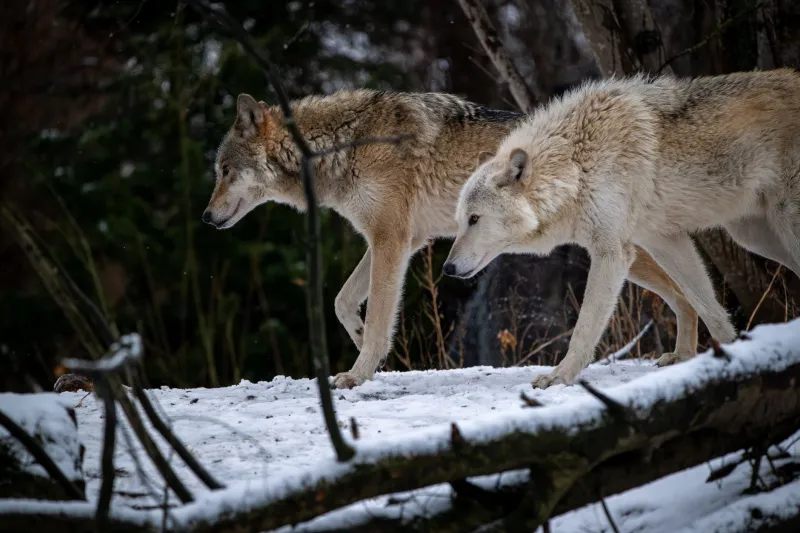
Something is happening right now in storytelling communities across the US that's worth paying attention to. In tabletop RPG groups, collaborative fiction forums, shared-world writing circles, and live-play actual-play podcasts, people are discovering something that wolves figured out a long time ago: the hunt goes better when you're not alone.
The story that emerges when a pack tells it together? It's almost always wilder, stranger, and more alive than anything one person could have built in isolation.
Why Solo Storytelling Has a Ceiling
Here's a thing that's uncomfortable to admit if you've spent years thinking of yourself as a writer: your imagination has edges. Every writer does. You tend toward certain kinds of conflict. Your villains probably share a few qualities. The way your characters talk in moments of crisis probably sounds a little like you.
None of that is a flaw — it's just the shape of one person's mind.
The problem shows up when you've been inside your own head so long that you stop being able to see the ceiling. You think you're building something expansive when you're actually running laps inside a familiar room.
This is where the pack changes everything.
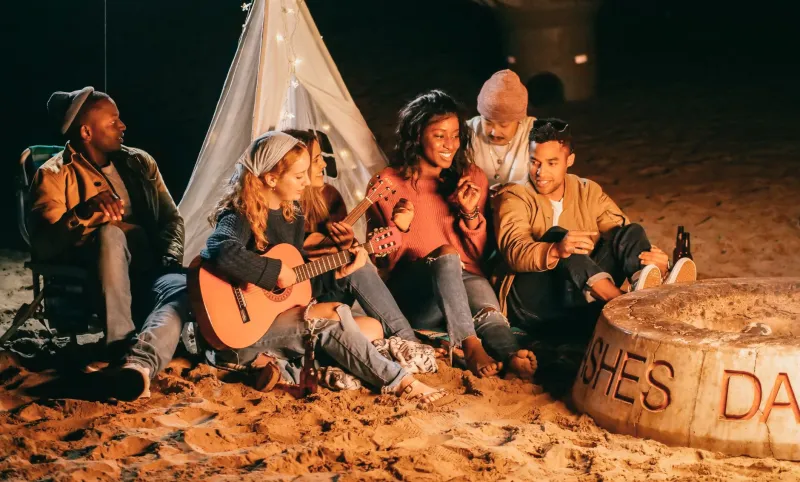
When you're building a story with other people — whether that's a tabletop campaign that's been running for two years, a writing circle where everyone contributes chapters to a shared world, or even a collaborative improv exercise — someone else's imagination crashes into yours at unexpected angles. They take a character you were planning to use as a minor obstacle and decide she's the most interesting person in the room. They introduce a plot element that breaks your outline and somehow makes the story better. They say yes to something you would have said no to, and suddenly a door opens that you didn't know was there.
That's not chaos. That's the hunt.
What Collaborative Storytelling Actually Looks Like in Practice
It comes in a lot of forms, and the form matters less than people think.
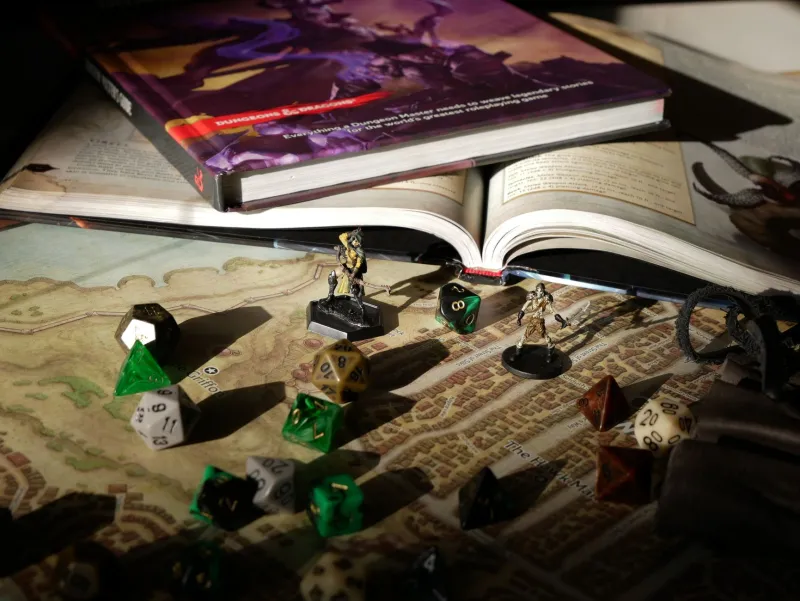
Tabletop roleplaying is probably the most familiar version. A Dungeon Master (or GM, or Storyteller, depending on your game) builds a world and sets a stage, and then a group of players collectively improvise their way through it. The best campaigns feel less like a game and more like a novel that nobody could have written alone — full of moments of genuine surprise, emotional weight, and the particular magic that happens when five people all care deeply about the same fictional world at the same time.
Writing circles with a collaborative bent work differently but tap the same energy. Some groups operate on a shared-world model, where everyone writes stories set in the same fictional universe and characters occasionally cross over. Others do something closer to relay fiction — passing a story from writer to writer, each one picking up where the last left off. The constraint forces creativity. You can't just do what you would have done. You have to respond.
Then there's the explosion of collaborative fiction happening in online spaces — shared Google Docs that become novels, forum-based roleplay communities that have been running continuous stories for a decade, Discord servers where dozens of writers build and inhabit the same world in real time. Some of these communities have produced genuinely extraordinary work that will never appear in a bookstore and doesn't need to.
How Group Dynamics Actually Make the Story Better
There's a concept in improv theater called "yes, and" — the practice of accepting what your scene partner offers and building on it rather than blocking or redirecting. It sounds simple. It's genuinely transformative when a group internalizes it.
Collaborative storytelling runs on the same principle. The best creative packs have an implicit agreement: I will take what you bring and make it bigger, not smaller. I will not protect my original vision at the expense of our shared one.
That requires trust. It requires a certain willingness to be wrong, to have your darlings killed by someone else's better idea, to find out that the story you thought you were telling was actually a stepping stone to a story none of you had imagined yet.
It also requires the right structure. The collaborative fiction communities that thrive tend to have a few things in common. There's usually someone playing a light editorial or facilitation role — not controlling the story, but keeping the shared world coherent. There are agreed-upon norms around what's in-bounds and what isn't. And there's enough regularity that the group builds a shared vocabulary, a shorthand, a sense of the world's internal logic that everyone can draw from.
Starting Your Own Fiction Pack
If this is making you want to grab some people and build something, here's what actually works:
Start smaller than you think. Three to five people is the sweet spot for a writing circle or collaborative fiction project. Big enough to generate genuine surprise, small enough to maintain trust and momentum.
Establish the world before you populate it. Spend a session or two just building the setting together before anyone starts writing or playing. What's the tone? What are the rules of this world? What kinds of stories do you want to tell in it? Getting alignment on these questions early prevents a lot of friction later.
Protect the yes-and. Make it an explicit norm early on. The goal isn't to execute anyone's original vision — it's to find the story that none of you could have found alone.
Meet regularly enough to maintain the thread. Monthly is probably the minimum for a writing circle. Weekly is better. The story needs to stay alive in everyone's heads between sessions.
Let it surprise you. This one sounds obvious until you're in the middle of a session and the story goes somewhere you didn't plan and your instinct is to pull it back. Don't. Follow it. That's where the good stuff lives.
The Story the Pack Tells
Wolves hunt in coordinated patterns that no single wolf could execute alone. One drives the prey, another cuts off the escape route, another waits. The kill that results is a product of collective intelligence, not individual genius.
The best stories work the same way. One person sets the scene, another complicates it, another finds the emotional truth buried underneath. What emerges belongs to the pack.
That's not a lesser kind of storytelling. In a lot of ways, it's the truest kind there is.