Running Solo Gets Old: How Americans Are Building Their Own Packs From Scratch
There's a certain romance to the lone wolf story. You've heard it a thousand times — the rugged individualist who needs nobody, answers to nothing, carves a path through the wilderness on pure grit alone. American culture practically built its mythology on that image. And for a while, a lot of us believed it.
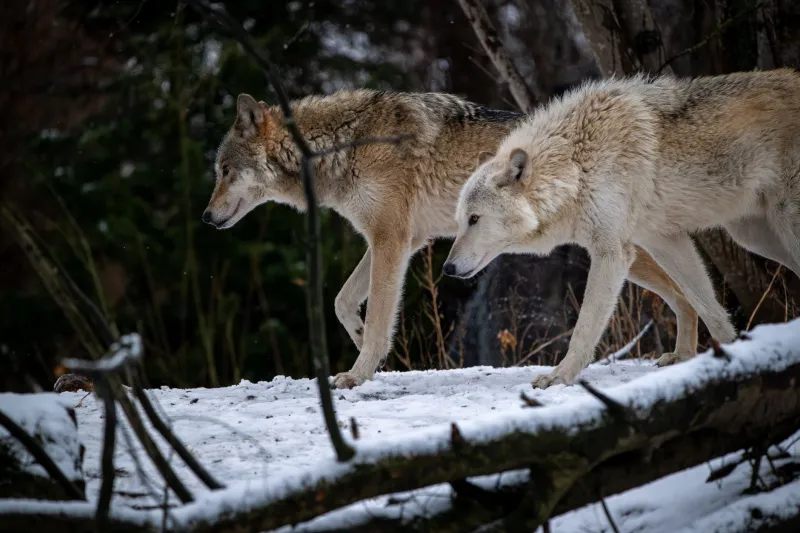
But here's the thing about actual wolves: they almost never go it alone by choice. A lone wolf in the wild isn't a symbol of freedom — it's an animal in transition, searching desperately for a pack to call home. The solo stretch is survival mode, not the destination.
Right now, quietly and in corners of the country you might not expect, people are figuring that out for themselves.
The Loneliness We Stopped Pretending Wasn't There
The numbers have been uncomfortable for a while. Surgeon General advisories. Polling data showing record percentages of Americans who say they have no close friends. Studies out of places like Brigham Young University linking social isolation to health outcomes as serious as smoking a pack of cigarettes a day. The pandemic ripped the bandage off a wound that was already there, and suddenly it became harder to pretend the lone wolf life was actually working.
What's interesting is what happened next. Instead of waiting for traditional community structures — churches, neighborhood associations, company softball teams — to fill the gap, a lot of people started building something new. Deliberately. Intentionally. From scratch.
Call it the chosen pack.
What a Chosen Pack Actually Looks Like
In Portland, Oregon, a group of strangers who met in a Reddit thread about urban foraging now spend two Saturdays a month hiking the Columbia River Gorge together, sharing meals and whatever they've managed to find growing wild. They've been doing it for three years. Two members have since moved across the country and still fly back for the annual gathering they started calling "the convergence."
In Memphis, a collective of Black women writers formed a critique circle that started with five people in a coffee shop and now has a waitlist. They've published together, traveled together, and shown up for each other through divorces, job losses, and the particular exhaustion of being a creative person who nobody in your immediate family quite understands.
In rural Wisconsin, a group of veteran farmers and young back-to-the-land types started a tool-sharing cooperative that evolved into something much harder to categorize — part mutual aid network, part philosophical discussion group, part chosen family.
None of these groups look the same. The thread running through all of them is the same, though: people who tried the solo path and found it hollow, who then went looking — sometimes awkwardly, sometimes desperately — for a pack that fit.
The Psychology Behind the Pull
Neuroscience has a few things to say about why this feels so urgent. Human brains are genuinely wired for social bonding in ways that go deep — oxytocin release, threat-response regulation, even the way memory consolidates differently when experiences are shared. Dr. Matthew Lieberman, a UCLA social neuroscientist, has argued that the social brain is our default operating system, not a bonus feature. Being connected isn't a nice-to-have. It's closer to a biological requirement.
Wolves operate on a version of the same principle. Pack life isn't just about hunting efficiency or protection from competing predators, though it helps with both. It's about the full architecture of a life — shared territory, communal pup-rearing, a social structure that allows individual wolves to thrive in ways they simply can't alone.
When researchers study wolf packs that lose members, they observe something that looks remarkably like grief. Behavioral changes. Altered movement patterns. A kind of restlessness that doesn't resolve until the pack stabilizes again.
Sound familiar?
Why Finding Your Pack Is Harder Than It Sounds
Here's where it gets real. Wanting community and actually building it are two very different things, and the gap between them trips a lot of people up.
For one thing, American culture has spent decades optimizing for individual convenience — streaming services that remove the need to agree on what to watch, remote work that eliminates the office as an accidental social space, delivery apps that mean you can go a full week without making eye contact with another human being. The friction that used to force connection has been engineered away.
For another, showing up vulnerable enough to actually join something — to say, explicitly or implicitly, "I need people" — cuts against a self-reliance script that runs deep. Especially for men, who report some of the steepest declines in close friendship over the past few decades.
The chosen packs that seem to work best share a few qualities. They form around a genuine shared interest or purpose, not just a vague desire to "meet people." They have some regularity — weekly or monthly touchpoints that create the kind of low-stakes repeated contact that friendship actually requires. And they have enough psychological safety that people can show up as something more than their most polished selves.
That last part is the hard one. It's also the one that matters most.
The Invitation
If you're reading this on Pack of Wolves, chances are you already understand something about what it means to run with a crew that gets you. Maybe you found it in a gaming community, a creative collective, a group chat that somehow became the realest conversation in your week.
Or maybe you're still out there in the in-between space — past the point of believing the lone wolf story, not quite sure yet where your pack is.
Either way, the hunt is the thing. Wolves don't wait for a pack to materialize out of thin air. They move toward it. They make noise. They listen for what answers back.
Go make some noise.